France stations 70,000 officers for second nationwide student march
Paris restricted the protest route to a single avenue and closed 24 metro stations as demonstrations returned a week after riots left over 2,000 people in custody.
By Omar Bennett ·
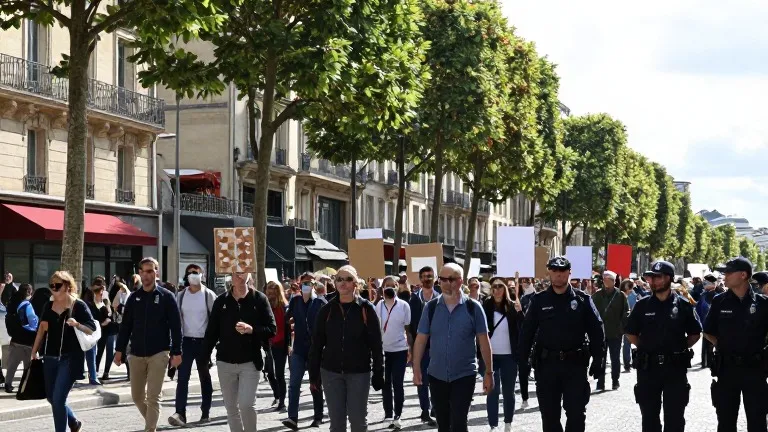
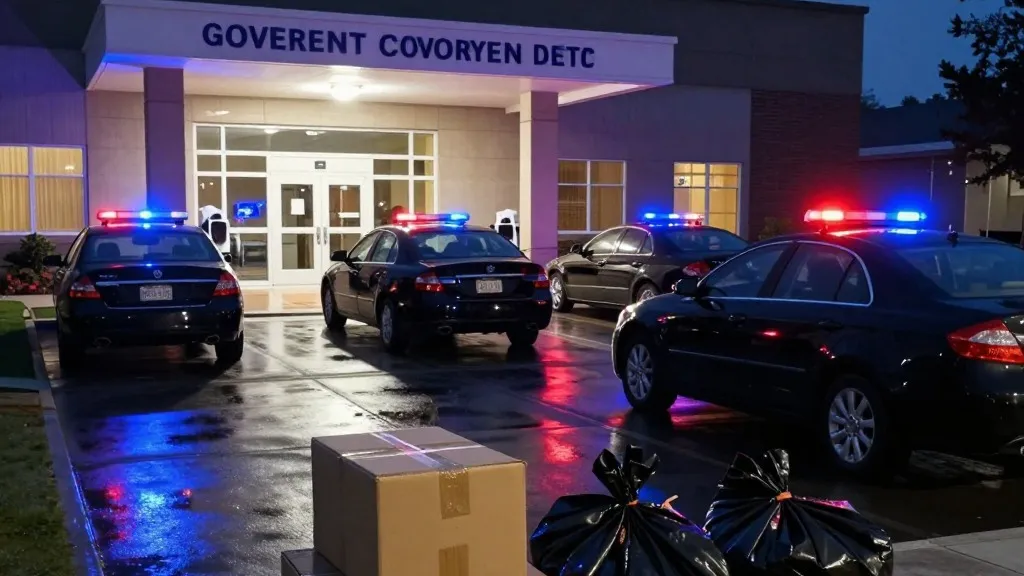
French authorities deployed more than 70,000 police officers and gendarmes across the country on Saturday for the second wave of mass demonstrations. The government aimed to prevent a repeat of the violence seen on October 17, when riots resulted in thousands of damaged businesses and over 2,000 arrests. Interior Minister Laurent Nunez stated that this deployment was 20 percent larger than the force level used the previous weekend, with the elite RAID unit providing support rather than direct crowd control.
In Paris, the permitted march route was limited to the Boulevards des Marechaux, running from Porte d'Italie to Porte de Vincennes. Local officials banned the originally negotiated central itinerary between Place de la Bastille and Place de la Nation. They also prohibited protests organized by groups other than labor unions. Emma, a podcaster participating in the march, described the route change as a tactic to drain the movement's energy. Monica, a retired education worker, said the decision made the movement appear invisible to the public.
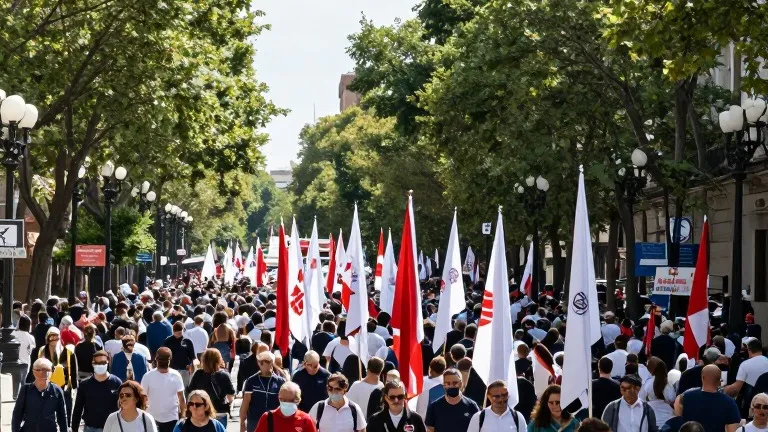
The demonstration brought together students, teachers, nurses, ecologists, and union representatives. Marchers chanted slogans such as "Too many billionaires; We are preparing the revolution" and "We are all anti-fascists." Some called for President Emmanuel Macron to resign. In central Paris, many businesses closed early and covered windows with protective panels. At least 24 metro stations were closed at the request of the police prefecture, while the Louvre and the Musee d'Orsay suspended operations for the day. Art Basel Paris also canceled its weekend program.
Police reported the situation remained calm by early Saturday afternoon, with at least 135 arrests made nationwide and various weapons seized. Protests were banned in the downtown areas of Montpellier, Rouen, and Nice. In Lyon, police used tear gas to disperse approximately 150 demonstrators. A union march in Marseille proceeded under strict conditions. The Yellow Vest movement announced a separate protest scheduled for October 31.
The unrest began in mid-September when high school students blockaded schools to protest poor building conditions, staff shortages, and the university admission system. On Friday, Macron met with student representatives for the first time since the crisis began. He promised additional teachers and a major overhaul of the Parcoursup admission platform. Students stated they would continue mobilizing until the government provides concrete actions. More than 500,000 people marched on October 17.
The protests occur six months before a presidential election in which Macron is barred from seeking a third term. Marine Le Pen of the National Rally leads recent polls by a wide margin. In Orleans, thousands of protesters shouted anti-fascist slogans near Le Pen's party congress, which marked the start of her campaign. Authorities expected 20,000 to 30,000 people to join a counter-demonstration in the city.
Source: Al Jazeera
More Politics · World news · Report a business · Got a Story?