State Finds Jackass Hill Park Viewpoint Not Historically Significant After Archaeological Dig
A preliminary state report concludes the Littleton viewpoint no longer qualifies as a significant site, clearing the way for South Suburban's planned vista terrace, though local advocates want the hilltop left alone or formally excavated.
By Arjun Patel ·
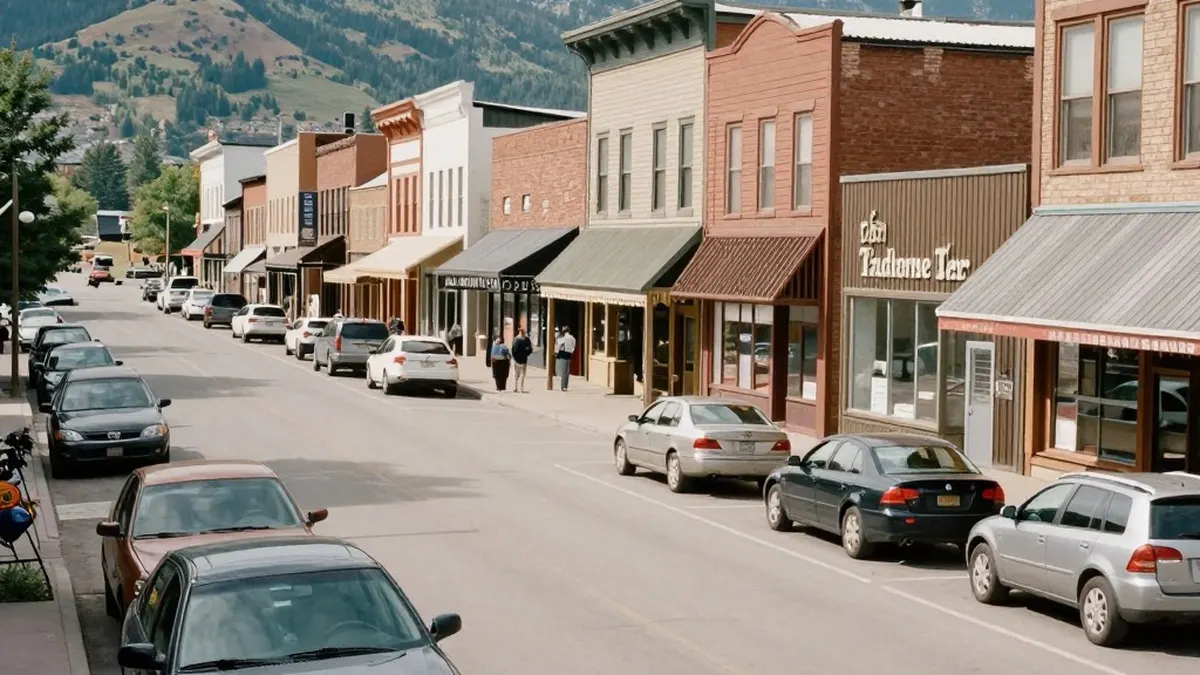
A preliminary state report has concluded that the viewpoint at Jackass Hill Park in Littleton is not historically significant, following an archaeological dig carried out at the site in August. The October findings remove an obstacle to a planned renovation by South Suburban Parks and Recreation.
The dig was prompted by the large number of artifacts that community members had found while searching the area. Littleton resident Ned Sterne and advocate archaeologist Craig Banister turned over hundreds of pieces to the state before the excavation began. According to the report, 209 indigenous artifacts handed in by the pair were examined, and 70% of them were cultural, while the other 30% were unmodified rocks.
Dr. Holly Norton, Colorado State Archaeologist and Deputy State Historic Preservation Officer, said South Suburban was receptive when her office asked to investigate whether a legitimate site existed. Crews worked at the location for three days. "It was pretty limited in scope what we ended up collecting," she said, describing mostly lithics, small pieces of chipped stone that point to activities such as making projectile points and arrowheads. Archaeologists also excavated a hearth.
The report classified the lookout point as an "indigenous open camp," where more than 350 artifacts were recovered. About 90% were undiagnostic bone fragments and lithic microflakes. Researchers also found larger lithic flakes and fragments of manos, and the hearth turned up in the same area.
Norton said the state needs clear boundaries when deciding whether to commit resources to preserving a site. "For us: there's no longer a site," she said. She agreed the location likely dates back thousands of years, but said the difficulty lies in determining what remains after decades as a well-loved neighborhood park. Many visitors, she said, collected artifacts and took them home. "The site is gone because of that collecting."
The report singled out the hearth as an artifact of interest. Banister and Sterne sent a piece of charcoal from inside it for testing. A radiocarbon analysis by ICA Labs Inc found an 82.2% probability that the charcoal had a calibrated age of 670-780 AD. Banister said he believes more material probably lies underground, noting that it is rare for a site to survive within a city's metro area because most land has been built over.
Sterne said he was not surprised by the conclusion, since the dig was shallow. Norton acknowledged this, saying the team used hand excavation, a method every archaeologist in North America uses to evaluate a site. Sterne wants South Suburban to revise its plan and leave the top of the hill alone, calling it "hallowed ground to many people in Littleton" and noting that existing data show it was used for 8,000 years.
Failing that, Sterne proposed a formal scientific excavation of the hilltop, pointing out that construction is expected to dig six feet deep. "It should not be archaeology by backhoe, which is about what's going to happen," he said.
The state recommended that an archaeologist monitor the future construction in case other materials are unearthed. South Suburban told Denver7 it is hiring an archaeologist before work begins. Norton said that digging deeper than the hand excavation reached could slightly raise the chance of finding more material, in which case the on-site archaeologists would help South Suburban and her office assess its significance.
Source: Denver7 (KMGH)