Seismic Shock Flattens Northern Tibetan Village as Winter Approaches
A powerful tremor has left dozens injured and hundreds homeless in the high-altitude Nagqu region, forcing a massive rescue operation under difficult weather conditions.
By Mariana Delgado ·
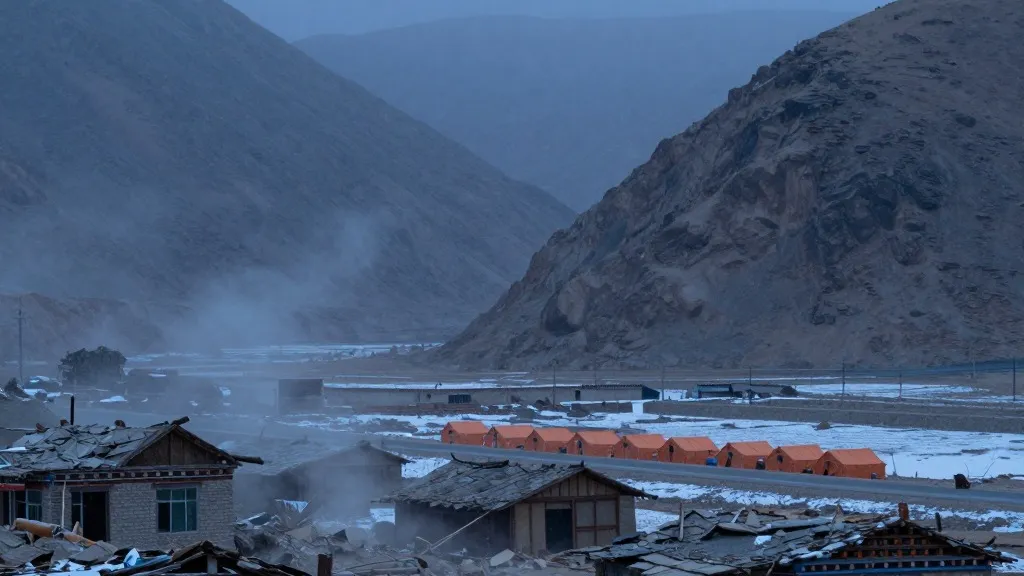
The death toll from the powerful earthquake that struck northern China on Thursday evening has reached at least sixteen people, with forty-six others reported injured. The magnitude 7 tremor caused extensive destruction, particularly in the area surrounding Nagqu, a city in the Tibet region where hundreds of structures were reduced to rubble.
Local authorities in Nagqu have confirmed that the devastation is severe. According to officials, at least 339 homes and 20 livestock sheds have collapsed in the vicinity of the epicenter. Among the forty-six injured individuals, eleven are in serious condition, while the remaining thirty-five have sustained minor injuries. Rescue teams are currently on the ground, continuing their search for survivors amidst the wreckage.
The scale of the response is substantial. More than 1,600 personnel from the local county have been mobilized to assist in the rescue efforts. Logistics teams have begun delivering critical supplies to the affected zone. These resources include 1,000 prefabricated housing units, approximately 3,000 tents and folding beds, as well as flashlights and winter clothing to aid those who have lost their shelters.
Infrastructure challenges have emerged in the wake of the quake. Xinhua News Agency, the state-run media outlet, reported on Friday that communication lines remain down in parts of the region. In response, local railway authorities implemented emergency protocols to halt train traffic through the affected corridor, prioritizing safety until further inspections can be conducted.
Road access has also been restricted. The seismic activity triggered rockfalls that blocked a section of National Highway 317. Officials have closed this stretch of the highway to general traffic. Only emergency response, rescue, and official support vehicles are currently permitted to pass while crews work to clear the debris from the roadway.
Weather forecasts suggest that conditions will remain challenging for the next few days. Xinhua noted that intermittent snow is expected across the quake zone over the coming three days. This precipitation could slow down rescue operations and complicate the distribution of aid to the hardest-hit areas.
CCTV, China's national broadcaster, identified this event as the most significant seismic activity in the region in the past five years. The timing of the quake, occurring late in the evening, likely contributed to the initial shock and the subsequent difficulty in assessing the full extent of the damage before dawn.
The U.S. Geological Survey provided specific technical details about the event. The earthquake registered at 10:33 p.m. local time on Thursday. It originated at a depth of 18 kilometers. The epicenter was located 191 kilometers to the east-northeast of Nagqu. This area is characterized by sparse population and high altitude.
Geographically, Nagqu is situated in a remote part of northern Tibet. The city lies more than 300 kilometers north of Lhasa, the capital of the Tibetan region. The remoteness of the area, combined with the rugged terrain and approaching winter weather, presents a significant logistical hurdle for the ongoing relief operations.
Source: CBC News