Ye secures $400,000 NSF grant for medical AI research
Georgia State professor will develop systems that combine clinical text with imaging data to mimic human diagnostic processes.
By Kenji Garnier ·
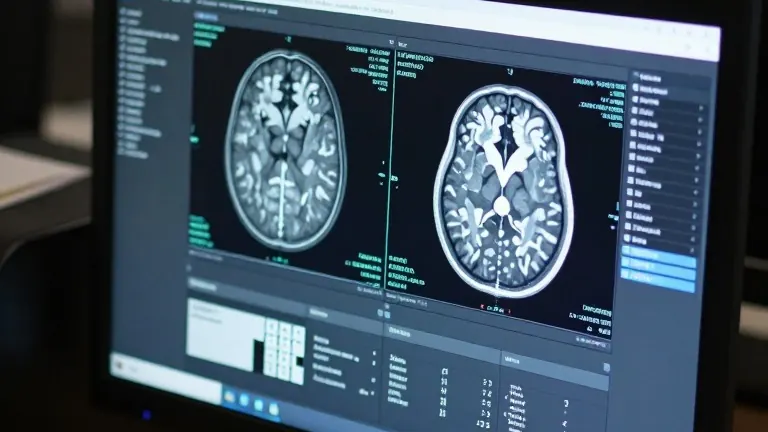
Dong Hye Ye, an associate professor of computer science at Georgia State University, has received a National Science Faculty Early Career Development Award. The grant provides more than $400,000 over five years to fund his research on vision-language modeling in medical image analysis.
Ye joined the university in 2022 and serves as a core faculty member at the Center for Translational Research in Neuroimaging and Data Science. His work focuses on advancing medical imaging through machine learning, with specific applications in neuroimaging, eye disease, and CT image reconstruction. He completed his doctoral research in the Section for Biomedical Image Analysis at the University of Pennsylvania.
The project aims to create artificial intelligence methods that interpret medical images alongside clinical text and patient information. Ye stated that clinicians do not read images in isolation but rely on patient history, prior scans, and clinical notes. The research seeks to build AI that performs the same task while remaining reliable when information is incomplete or noisy.
The study will explore applications in radiology reporting, eye disease, and adolescent brain development. The goal is to produce more accurate and interpretable results, including the automatic generation of radiology reports. This approach integrates innovative research with educational excellence, a key criterion for the NSF award.
Ye expressed gratitude for the support and credited his students for their contributions to the project. He emphasized the importance of AI systems that stay reliable in real clinic environments where data quality varies.
Todd N. Rosenstiel, dean of the College of Arts & Sciences at Georgia State, commented on the award. He described Ye's work as innovative research with a commitment to public impact. Rosenstiel noted that the project contributes to improving patient care by helping clinicians interpret medical images with greater accuracy and reliability.
The NSF CAREER Award supports early career faculty who demonstrate potential to make contributions to research and education. The program builds careers that integrate research with educational excellence. Ye's project represents one such effort to bridge context in medical imaging.