Arctic Ecology: Wolf Spider Diets Shift With Seasonal Warming
A new study in the Journal of Animal Ecology reveals that arctic wolf spiders switch from fungal to plant-based energy sources as summer lengthens.
By Elena Svoboda ·
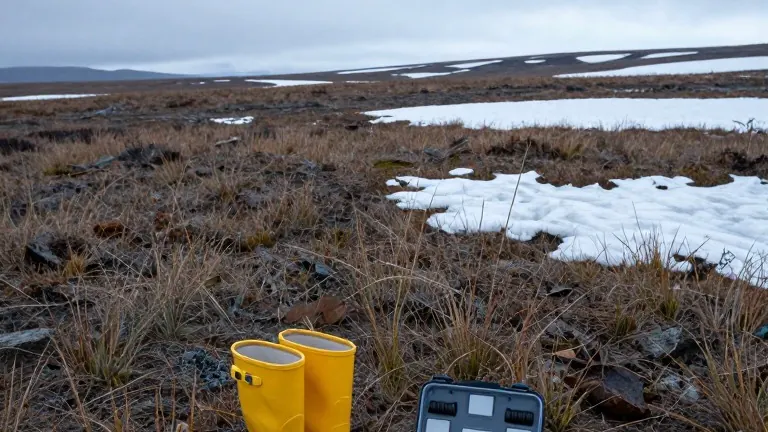
Arctic wolf spiders are altering their diet composition in response to changing seasonal conditions in Alaska.
Researchers at the University of Texas at Austin have documented a specific shift in the energy sources consumed by these predators. The findings were published last week in the Journal of Animal Ecology. The study indicates that spiders rely on fungal-derived energy during the early summer months and at sites with lower productivity. As the summer reaches its peak, the spiders transition to consuming prey that provides plant-based energy.
This dietary change correlates with the length of the summer season. In the Arctic environment, temperatures remain below freezing for most of the year. Extended summer periods allow for more time to feed and reproduce. The research team observed that warmer conditions enable wolf spiders to produce multiple clutches of eggs rather than just one. This increase in population density influences which prey items are selected, as higher numbers of spiders compete for available food sources.
Amanda Koltz, an assistant professor in the Department of Integrative Biology at UT Austin, led the project. She works alongside Nevo Sagi, a postdoctoral fellow in her lab. Sagi led the specific research effort detailed in the new paper. The team conducted fieldwork along the Dalton Highway in northern Alaska. They collected data at several sites to track how spider diets vary across different locations and times of the year.
The methodology used in this study addresses a challenge in studying spider diets. Unlike fish, spiders digest their prey externally, making standard dissection techniques less effective for identifying specific food sources. The researchers employed essential amino acid carbon isotope fingerprinting. This technique allows scientists to trace carbon from plants, fungi, and bacteria to the spiders. By analyzing these carbon signatures, the team determined the primary energy sources for the wolves spiders at different stages of the season.
The results show a clear temporal pattern in energy consumption. Early in the summer, the spiders depend more heavily on energy derived from fungi. This reliance suggests that spiders may have a greater impact on decomposition processes during this period. Later in the summer, the shift toward plant-based energy indicates a change in their ecological role. The study also found that larger wolf spiders relied more on plant-derived carbon than smaller individuals. This suggests that the size of the spider influences its prey choice and its potential effect on the ecosystem.
Koltz noted that spiders serve as critical predators in terrestrial ecosystems. They connect different parts of the food web by consuming both herbivores that feed on living plants and detritivores that break down dead plant material. Because wolf spiders are abundant in the tundra, their interactions can influence how the entire ecosystem functions. Understanding these interactions helps scientists predict how environmental changes might affect food webs in other regions.
The research contributes to a decade of work by Koltz's team on the effects of environmental change on arctic spiders. The findings highlight how warming temperatures can alter predator abundance and behavior. These changes may cascade through the food web, affecting microbial communities and processes such as decomposition. The team continues to investigate how these shifts in spider diets ripple through Arctic ecosystems.
Source: UT Austin News