Courts and ballots: Legal battles shape the 2026 midterm vote
Federal judges issued conflicting orders on noncitizen voting and California mail ballots, while the Postal Service scrambled to meet deadlines.
By Kenji Garnier ·
The legal landscape surrounding the 2026 midterm elections is defined by a series of high profile court rulings that have altered how votes are counted and verified in key states. On Monday, a federal judge temporarily barred the Trump administration from implementing a plan designed to prevent noncitizen voting. Critics of the administration argue that this plan risks disenfranchising eligible voters and infringes on the authority of states to manage their own elections. The ruling adds a layer of complexity to an election already fraught with tension between federal oversight and state autonomy.
Simultaneously, a judge ordered the administration to stop demanding that California election officials segregate ballots cast by individuals on lists of suspected noncitizens. This specific order impacts one of the largest voting jurisdictions in the country, where mail ballots are the primary method of casting a vote. The decision was seen as a significant intervention in the final days of the election cycle, providing relief to California officials who had been preparing for potential logistical hurdles. The move highlights the ongoing legal dispute over how to verify voter eligibility without creating barriers for eligible citizens.
The Trump administration has continued to assert that noncitizens vote in large numbers, a claim that has fueled its legal strategy in multiple states. This assertion has led to lawsuits in Alaska and California, where the Justice Department has threatened to prosecute local election officials. Democrats have expressed concern that these actions could lead to interference and intimidation at the polling place level. The administration maintains that its actions are necessary to ensure the integrity of the electoral process, while opponents argue that the legal moves are designed to cast doubt on the results before they are even certified.
In Alaska, the Trump administration filed a lawsuit related to the certification of the Senate result, adding another dimension to the legal challenges in that state. The race for the U.S. Senate in Alaska is considered competitive, with the state voting for Donald Trump by a margin of 13.1 points in the 2024 presidential election. The legal maneuvering in Alaska underscores the broader strategy of the administration to scrutinize the certification process in swing states. This approach has raised questions about the timeline for certifying results and the potential for delays in declaring winners in close races.
The U.S. Postal Service has taken significant steps to ensure that mail ballots are counted on time, adding hours, staff, and special lines to handle the increased volume. This measure is critical in states like California, Colorado, Hawaii, Nevada, Oregon, Utah, Vermont, and Washington, where mail voting is a dominant feature of the election. The Postal Service's actions aim to mitigate the risk of ballots being lost or delayed, a concern that has been amplified by the legal disputes over voter eligibility. The agency's expanded operations reflect a broader effort to maintain the efficiency of the mail ballot system despite the added scrutiny.
The legal battles are occurring against a backdrop of high voter turnout, with more than 57 million people having already cast their ballots as of Monday. This number surpasses the early vote of four years ago in many closely watched states, indicating a high level of engagement among the electorate. The surge in early voting has put additional pressure on election officials to process ballots efficiently and accurately. The combination of high turnout and legal uncertainty has created a dynamic environment where both parties are closely monitoring the administrative aspects of the election.
Republicans are bracing for the possibility of losing the House while fighting to hold the Senate, with one or two seats potentially tipping the balance of power in either chamber. Democrats, meanwhile, are described as cautiously optimistic about their chances. The outcome of the House race is particularly sensitive, as Democrats need a net gain of three districts to secure a majority, while Republicans can lose no more than two seats. The legal disputes over voting rules could influence the final count in these closely contested districts, making the administrative details of the election as important as the political ones.
The Senate race involves 35 seats, with Democrats needing a net gain of four seats to achieve a majority and Republicans able to lose only two. The legal challenges in states like Alaska and California could have implications for the certification of results in these races. The administration's focus on verifying voter eligibility has been a central theme in its communications with the public, emphasizing the need for a clean and accurate count. This emphasis on verification has resonated with some voters who are concerned about the integrity of the electoral process, while others worry about the potential for overly strict enforcement.
The governor races in 36 states are also subject to the same legal and administrative pressures, with Democrats aiming to hold a majority of governorships for the first time in two decades. The legal disputes over voting rules could affect the outcome in these races as well, particularly in states where the margins are expected to be narrow. The administration's legal strategy has been consistent across different levels of the election, focusing on the verification of voter eligibility and the proper handling of mail ballots. This consistent approach reflects a broader effort to establish a uniform standard for the 2026 midterms.
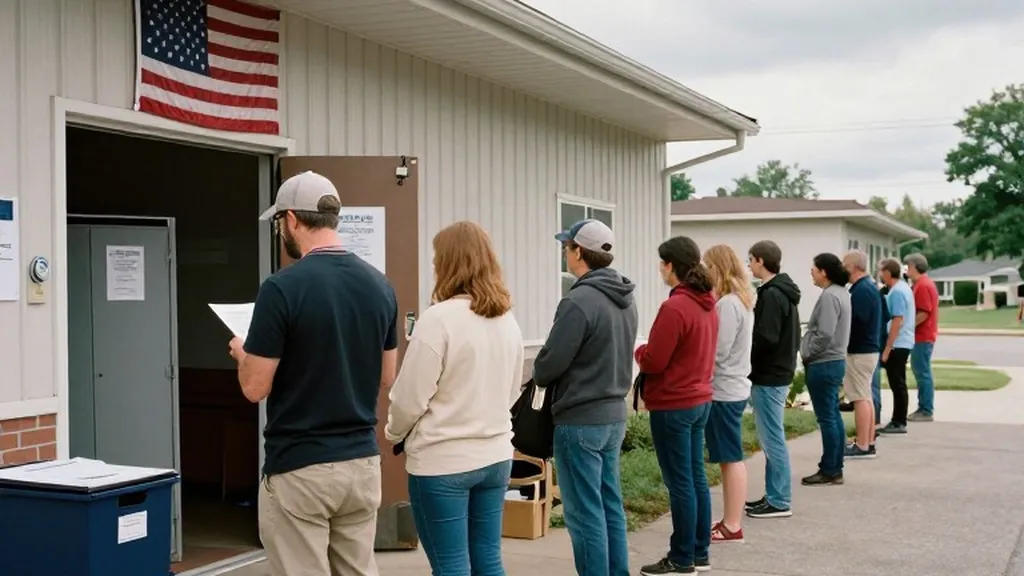
As polls open across the country, voters are casting their ballots in a system that is being closely watched by federal courts and legal teams. The rulings issued on Monday have set the stage for a contentious period of ballot counting and certification. The Postal Service's expanded operations and the legal orders regarding noncitizen voting represent key elements of the administrative framework for this election. The outcome of the 2026 midterms will be determined not only by the political preferences of voters but also by the legal and administrative processes that govern how those votes are counted and verified.