Florida Sunsets Shift One Hour Earlier as Clocks Roll Back
The state returns to standard time Sunday, ending a cycle that lawmakers have tried to abolish for years without federal approval.
By Elena Svoboda ·
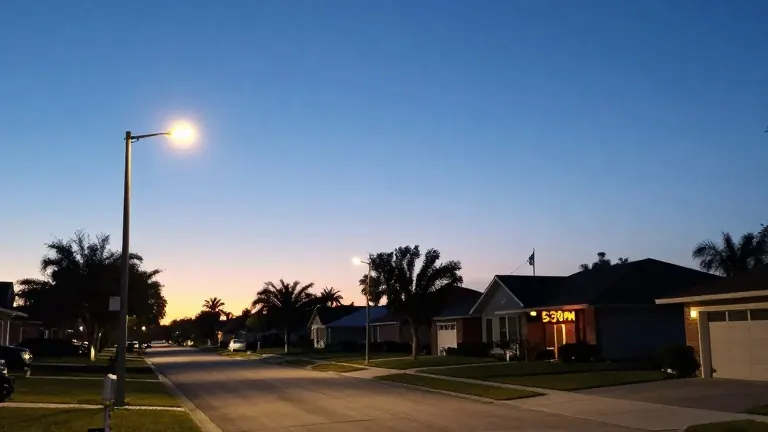
Residents across Florida and much of the United States will lose one hour of evening daylight this Sunday as clocks reset to standard time.
The change follows the Uniform Time Act of 1966, which mandates that at 2 a.m. local time, the hour hand moves back to 1 a.m. This adjustment results in earlier sunrises and sunsets for the coming months. In most parts of the state, sunrise times will move from approximately 7:40 a.m. to 6:40 a.m., while sunset will shift from 6:40 p.m. to 5:40 p.m.
The biannual clock change has remained in place despite legislative efforts to eliminate it. Florida lawmakers passed the Sunshine Protection Act in 2018, signaling the state's desire to keep daylight saving time in effect year-round. While nearly two dozen states have enacted similar measures, Congress has not yet granted the federal approval required to make the shift permanent. Consequently, the current twice-yearly schedule remains the legal standard.
Public opinion on the matter is divided. A recent Gallup poll indicates that 72% of Americans dislike the biannual time change. However, respondents are split on the preferred alternative. Approximately half of those surveyed support year-round standard time, while only about a quarter favor permanent daylight saving time. The core of the debate centers on whether citizens value additional morning light or extended evening daylight more.
Adopting a permanent daylight saving time model would alter the seasonal light cycle. Under that system, the latest sunrise of the year would occur between 8:30 and 9 a.m. in late January. Currently, the winter solstice is set for Monday, December 21. This date marks the shortest day and longest night of the year, as well as the official beginning of astronomical winter in the Northern Hemisphere.
Days will continue to lose more than a minute of daylight each day until that solstice arrives. The clock change itself does not alter actual weather conditions, which are determined by Earth's tilt rather than the timekeeping schedule. The next adjustment is scheduled for March 14, 2027, when clocks will spring forward one hour to reinstate daylight saving time.
Until then, the state operates on standard time, providing earlier mornings but darker evenings.
Source: WLRN
More Business · Consumer Alerts · Report a business · Got a Story?