Global Port Strike: Workers Halt Shipments to Protest Arms
Unions in six countries called for a coordinated day of action on Friday, aiming to block military cargo and improve labor conditions.
By Elena Svoboda ·
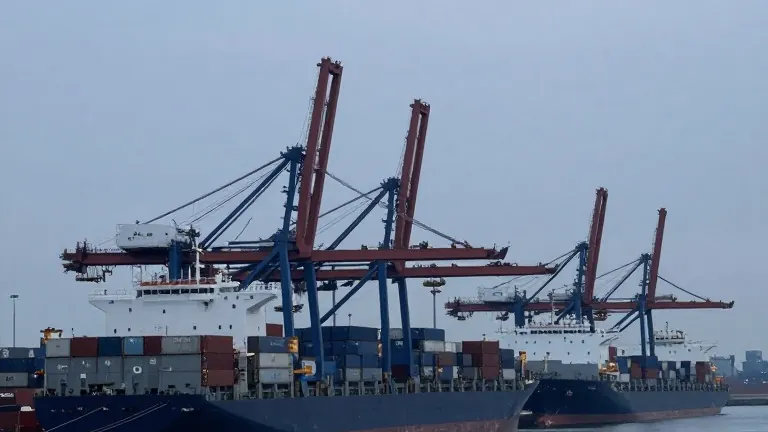
Dockworkers across Europe, Turkey, and Morocco began halting operations on Friday, joining a coordinated effort to block arms shipments and demand better pay. Unions in France, Italy, Greece, Spain, Turkey, and Morocco issued a joint statement calling for an end to the wars in the Middle East, specifically citing the conflict in Gaza, and demanding a stop to what they term the militarization of ports.
The group declared that ports should not transport weapons, ammunition, military equipment, or troops. "Dockworkers do not work for war!" the statement read. Organizers reported that more than 100 ports across multiple countries joined the movement, potentially affecting operations in parts of Europe, the Mediterranean, and North America.
In Greece, the ENEDEP dockworkers’ union led a strike at Piraeus, the country's largest port. Ships also remained docked at several Greek locations due to a separate seafarers' strike seeking higher wages and improved safety. In Istanbul, Turkey, protesters gathered outside Haydarpasa port with a banner reading, "No to war, no to armament!"
Italian unions, including the Unione Sindacale di Base, planned demonstrations in Genoa, Trieste, and Gioia Tauro. These actions coincided with a nationwide general strike protesting rising living costs and military spending. In France, the CGT ports and docks federation called for a one-day strike in Le Havre, Marseille, Dunkirk, and Rouen to reject European policies on port facilities and oppose French budget proposals.
The scale of the disruption varied by location, ranging from full-day strikes to shorter walkouts. Supply chain firm C.H. Robinson advised clients that operational disruptions and shipment delays were possible, with severity depending on local participation. Experts generally predicted the impact on global trade would be limited.
Marcus Baker, global head of marine, cargo and logistics for Marsh, noted that a 24-hour strike is unlikely to cause material disruption to global trade flows, though it could affect perishable goods. He added that the strike adds complexity to supply chains already pressured by Middle East tensions, climate events, and tariff shifts. Judah Levine of Freightos warned that the strike could worsen congestion in ports like Genoa, where vessels already wait one to two days for slots. Ed Anderson, a supply chain professor at the University of Texas, said the protest was not expected to cause outright shortages, noting that one day of work stoppage is a minor disruption.
Source: KSAT-TV
More Business · Consumer Alerts · Report a business · Got a Story?