Libyan Parliament Ratifies $100 Billion Turkish Sea Corridor
The unanimous vote creates a direct maritime link between the two nations, drawing sharp legal and political opposition from Greece and the European Union.
By Kenji Garnier ·
Libya’s parliament unanimously approved a maritime agreement with Turkey on Tuesday, establishing a direct economic corridor between the two countries.
The decision reverses a position held by the eastern government when Turkey first negotiated the deal in 2019 with the United Nations-recognized Government of National Accord in western Libya. Turkey’s Foreign Ministry welcomed the vote, signaling a shift in the eastern bloc’s stance.
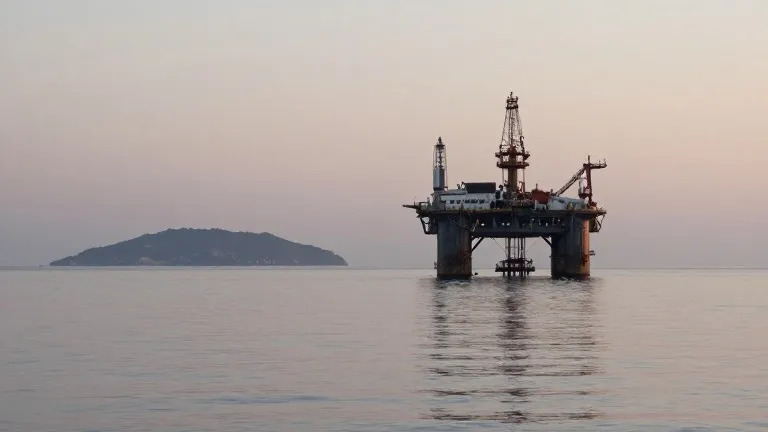
The corridor connects Turkey’s southern coast to Libya’s northern coast. Estimates indicate that natural gas reserves in the area could be worth several hundred billion US dollars. Ankara and Tripoli intend to secure their economic rights to these resources and develop them jointly.
Athens opposes the arrangement because it bypasses Greek islands, including Crete, Karpathos, and Rhodes. Greece’s Foreign Ministry stated on X that it firmly rejects the accord with the backing of the European Union. The EU described the memorandum as null and void because it violates the sovereign rights of third states and conflicts with the Law of the Sea.
Kaja Kallas, the EU’s high representative for foreign affairs and security policy, reiterated this stance on X. She noted that she had raised the issue of the Libyan vote and emphasized that it infringes upon the sovereign rights of third states.
The legal dispute centers on the status of inhabited islands. Greece relies on Article 121 of the UN Convention on the Law of the Sea, which grants islands that support an economic life of their own the same exclusive economic zone rights as mainland territory. Athens cites a 2022 International Court of Justice ruling involving Colombia and Nicaragua, which held that overlapping interests require a fair demarcation based on coastlines and geography. Turkey argues that Mediterranean geography deserves special weight, contending that full exclusive economic zones for every small Greek island would cut Turkey off from the open sea. Ankara has not signed the convention and does not accept arbitration by a UN tribunal.
Political dynamics in Libya have shifted since the civil war of 2019, when Turkey militarily supported the Tripoli government against eastern General Khalifa Hifter. A subsequent rapprochement with Hifter’s camp has led to Turkish firms winning billions in reconstruction contracts. Turkey’s state oil company TPAO is currently working with Libya’s National Oil Corporation on seismic survey plans. Turkey also provides weapons and training to Hifter’s forces, a move that counters Egyptian and Russian influence in the region.
The new corridor threatens the planned EastMed pipeline, which is designed to transport gas from Israel and Cyprus through Greece to bolster EU energy security. Turkey has argued that it requires consent for cable or pipeline projects on its claimed continental shelf. The agreement may solidify two regional blocs: a Turkey-Libya axis and an EU-supported grouping of Greece, Cyprus, Egypt, and Israel.
Source: Deutsche Welle