Miami Airport Debuts New Digital Cargo System
The new platform aims to cut truck wait times and carbon emissions at the world's busiest cargo hub.
By Omar Bennett ·
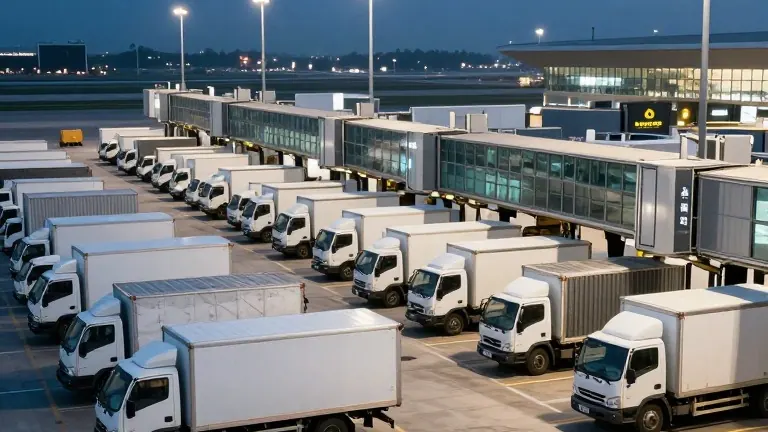
Miami International Airport launched the Airport Cargo Community System on October 27. The platform is the first AI-powered digital network deployed at the world's largest cargo airport. It replaces fragmented manual data exchanges with a shared portal for freight forwarders, handlers, and truckers.
The system was developed by Kalé, an industry technology firm. The launch took place at the International Air Cargo Association's Air Cargo Forum in Miami. Miami-Dade County Mayor Daniella Levine Cava announced the rollout. She stated that the technology will make the airport more future-ready. Her goal is to simplify the movement of goods and support jobs dependent on international trade.
Currently, cargo trucks arrive at the airport with limited data regarding arrival times and cargo types. This lack of information contributes to congestion and higher carbon emissions. The new system will improve information sharing and advanced planning. It will also optimize truck scheduling to reduce waiting times and increase productivity across the cargo ecosystem.
Miami International Airport handled a record 3.4 million U.S. tons of freight in 2025. This volume makes it the busiest freight airport in the United States and the third busiest globally, behind Hong Kong and Shanghai. The airport processes an average of 190 cargo-only flights and more than 1,600 truck trips daily. Amar More, co-founder and CEO of Kalé, noted that small inefficiencies grow in scale at this level of volume.
Projected savings from the system include 15% in paper handling and an average reduction of two hours in truck turnaround time. These changes could save 5,900 U.S. tons of carbon dioxide emissions and 3,000 trees annually. The system is also expected to save up to $250 million in operational costs within the air cargo supply chain each year.
The airport is currently undergoing $14 billion in capital improvements and maintenance upgrades. It serves as the leading economic engine for Miami-Dade County, generating $212 billion in business revenue annually. The new digital infrastructure will also facilitate connections with international partner airports along specific trade lanes.
Source: Community Newspapers
More Business · Consumer Alerts · Report a business · Got a Story?