Knesset Election: Netanyahu Faces 19-Year Test in 120-Seat Race
Polls show a narrow gap between the pro-Netanyahu bloc and the opposition, with the outcome potentially hinging on a single seat.
By Elena Svoboda ·
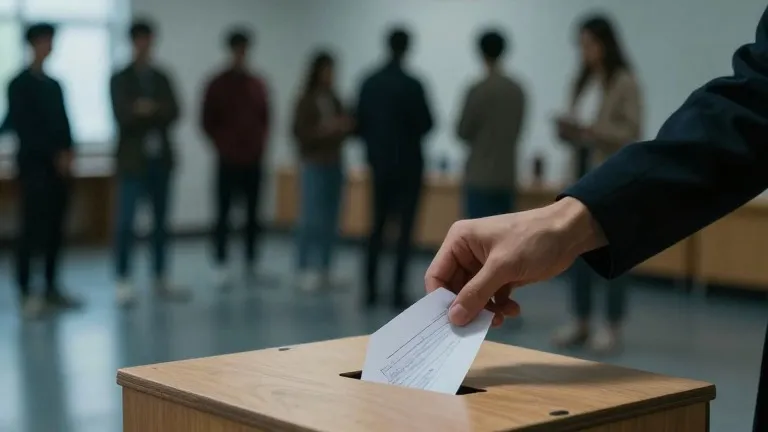
Israelis cast ballots on Tuesday in a national election that centers on the political future of Prime Minister Benjamin Netanyahu. He has served as prime minister for 19 of the past 30 years, a tenure that defines the current political split. The race is framed less as a ideological battle between left and right and more as a direct referendum on his leadership. Current polling data indicates that the pro-Netanyahu and anti-Netanyahu camps are running very close.
The main challenger is Gadi Eisenkot, a former chief of staff of the Israel Defense Forces who entered politics four years ago. His party, Yashar, translates to straight or direct, reflecting a campaign style focused on plain speech rather than showmanship. At a rally in Modi'in this week, supporters praised his directness. Noa Sadeh, a 56-year-old attendee, stated that she is tired of politicians who focus on rhetoric and wants a leader focused on execution.
The opposition bloc is a coalition of former allies and rivals of Netanyahu. It includes former prime minister Naftali Bennett and Avigdor Lieberman, both from the nationalist right who previously worked closely with the prime minister before breaking with him. On the far right, Itamar Ben-Gvir’s Otzma Yehudit party is also campaigning against the prime minister. Yishai Fleisher of that party told voters in Bet Shemesh that Netanyahu tends to drift left and needs to be pulled to the right, advocating for more settlements and a ministry to encourage the voluntary departure of Palestinians.
Netanyahu has shaped the campaign narrative by framing the choice as a binary decision between the right and Palestine. His campaign posters place opposition leaders alongside the heads of parties representing Palestinian citizens of Israel, who comprise about one-fifth of the population. The central strategic question for the opposition is whether they will rely on mainly Arab parties to form a government. Pro-Netanyahu media, particularly Channel 14, have kept the opposition on the defensive throughout the final weeks of the campaign.
One notable incident this week involved Yinon Magal of Channel 14, who referred to Eisenkot as a Moroccan monkey. Eisenkot did not repeat the slur at the Modi'in rally, a restraint that admirers viewed as disciplined while doubters saw as a lack of understanding of his opponent. The close polling remains a puzzle for observers given the challenges Netanyahu has faced in recent years.
The 7 October 2023 attack, the deadliest in Israel's history, occurred under his watch. The subsequent war in Gaza killed more than 70,000 Palestinians, with Israel stating that a third were Hamas combatants, yet Hamas was not eradicated. Additionally, Iran's nuclear threat persists despite promises of its destruction. Netanyahu also faces legal and political fallout from his attempt to curb the supreme court, the Qatargate affair, and an ongoing corruption trial. Oded Levi, a 2022 Netanyahu voter who attended an Eisenkot rally, stated that the prime minister is responsible for the current situation.
Netanyahu's resilience is attributed to a loyal base built over three decades that has remained intact despite reports that he received credible warnings of the October attack. His allies argue that army and intelligence chiefs kept him in the dark, a claim that observers describe as unfounded. He is also considered a skilled coalition builder, with many expecting him to outmaneuver rivals in post-election negotiations.
Opposition hopes are boosted by the return of many liberal, secular expatriate Israelis to vote. These voters are not fully captured by standard polling and could influence the result if the margin is as small as one of the Knesset's 120 seats. On Thursday, a state ceremony marked the 1995 assassination of Yitzhak Rabin. Netanyahu sent a low-ranking minister in his place. Yair Golan, leader of the Democrats, expressed optimism about forming a regional strategic process for security, though he avoided the term peace process.
A video circulating this week showed young Israelis at a Negev music festival singing Shir LaShalom, the song Rabin sang before his assassination. For many in the opposition, this cultural moment and the surge in returning voters suggest a potential shift in the political landscape.
Source: The Guardian
More Politics · World news · Report a business · Got a Story?