Michigan religious leaders and voters clash over Senate race rhetoric
Muslim and Jewish groups in Michigan cite attack ads and partisan polarization as drivers of rising tension ahead of the November election.
By Elena Svoboda ·
Michigan religious minority groups are reporting increased pressure from political messaging as the state prepares for its U.S. Senate election.
Democratic U.S. Senate nominee Abdul El-Sayed and his Republican opponent Mike Rogers are the focus of competing criticisms from Muslim and Jewish communities. These groups say their identities are being used as campaign props or targeted through stereotypes in recent advertisements.
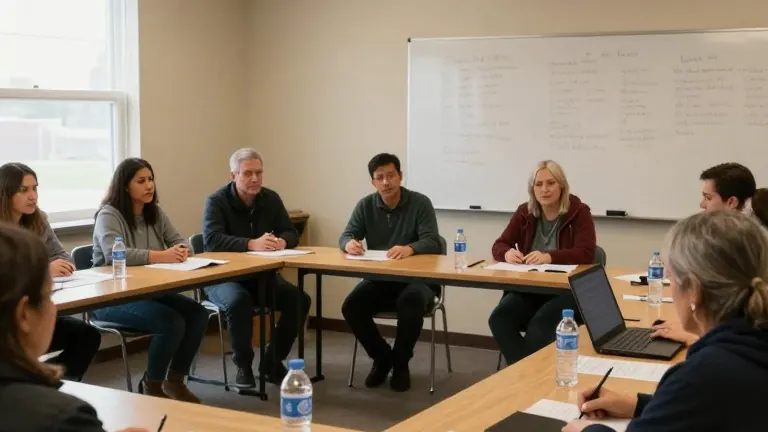
During a gathering Tuesday at a children’s play space in Canton, Democratic women discussed the impact of anti-Muslim rhetoric. The group included Rep. Rashida Tlaib, who described the constant exposure to negative imagery as a daily burden for families.
Tlaib said, “This is literally our daily lives, turning off the radio when an ad comes up. Turning the images that we get on our TV when we’re literally just trying to watch football or the series. We’re completely being bombarded by this dehumanization.” She blamed President Donald Trump for creating an environment similar to 2016 and 2017, when hate speech against immigrant and Muslim communities rose sharply.
Business owner Sara Khan, also speaking at the Canton event, criticized politicians for courting Muslim voters only when elections approach. She stated, “Our communities are not photo opportunities; our communities are not campaign props. Our communities are not representative of all of us if you meet with a few of us.” Khan added that respect should not end once votes are secured.
In a separate press conference earlier that day, a group of rabbis known as Nonnegotiable Michigan pushed for more measured language in the race. The organization accused the progressive group Rebellion PAC of using anti-Jewish stereotypes in an ad supporting Rogers. The ad depicts a couple in a grocery store complaining that U.S. aid to Israel goes toward killing Palestinians.
The El-Sayed campaign stated in a statement that it was “not affiliated in any way” with Rebellion PAC or the specific advertisement. The campaign said its focus remained on combating high costs driven by President Trump’s agenda. However, Rabbi Aaron Starr of Southfield’s Congregation Shaarey Zedek argued that El-Sayed has not done enough to actively discredit the commercial. “He’s not discrediting the commercial, he’s just distancing himself from it. He’s acknowledging he’s not the one that put it out,” Starr said.
Starr noted that Nonnegotiable Michigan was founded to call out extremism within the Democratic Party, where Jews have historically voted in large numbers. He said the group hopes to encourage multigenerational Republicans to do the same in their own party. Meanwhile, a separate group, Michigan Jews for Democracy, is circulating a letter urging Jewish Democrats to support El-Sayed. School principal Yvonne Lewis said she believes political leaders are exploiting pain points to divide Americans, but she expects the broad range of positive cross-cultural experiences in the state will limit the effectiveness of those stereotypes.
Source: Michigan Public