Mortgage Rates Hit Three-Year High as Housing Market Stalls
Pending sales and builder confidence have fallen to historic lows ahead of the midterm elections, despite recent executive actions.
By Kenji Garnier ·
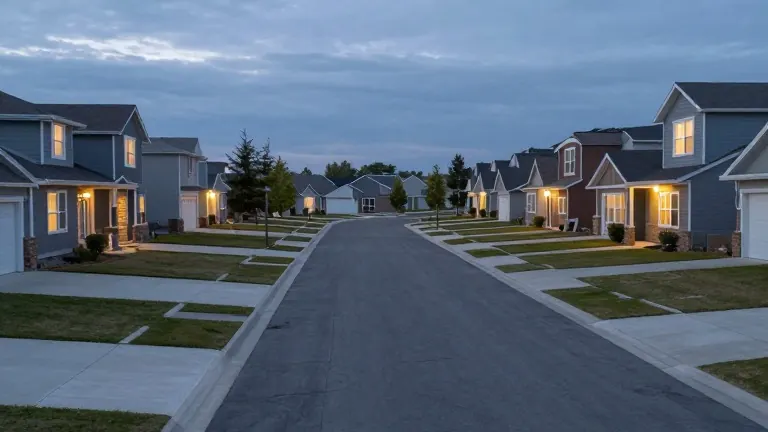
The U.S. housing market has entered a state of paralysis as buyers retreat and construction activity slows. This stagnation arrives just weeks before the midterm elections, a period when affordability concerns dominate political discourse.
Mortgage rates have surged back above 7%, reaching a three-year high of 7.4% last month. The average 30-year fixed rate eased slightly to 7.24% last week, according to Freddie Mac data. This spike in borrowing costs has added pressure to a market already struggling with high home prices.
Affordability metrics show a sharp deterioration over the last decade. As of the third quarter, the average household must earn $115,600 to cover typical housing costs. That figure is 75% higher than the $66,200 required five years ago, according to Oxford Economics. Consequently, the number of homes changing hands has hovered near 30-year lows for the past three years.
President Donald Trump has linked his housing strategy to lowering interest rates. In a cabinet meeting earlier this year, he stated, "We're going to make it easier to buy. We're going to get interest rates down." In January, he directed Fannie Mae and Freddie Mac to buy $200 billion in mortgage-backed securities. Rates briefly dipped below 6% in February, the lowest point since 2022, before rising again following the U.S. conflict with Iran.
The bond market has driven recent volatility. The 10-year Treasury yield, which anchors mortgage rates, has moved due to renewed inflation fears, oil price shocks from the Iran conflict, and rising federal deficits. These factors have kept borrowing costs elevated despite earlier intervention attempts.
Market indicators reflect the strain. Pending home sales fell to a record low in September, the lowest level in data dating back to 2001, according to the National Association of Realtors. New home construction also dropped to a four-month low, Census Bureau data showed. Homebuilder sentiment sank to a 14-year low in September, the National Association of Home Builders reported.
Federal efforts to boost supply have faced structural limits. Zoning and permitting decisions remain local, though the White House signed an executive order last month to ease mortgage insurance burdens. Davis Ingle, a White House spokesperson, said, "President Trump has been laser-focused on making housing more affordable." However, the administration's tariff regime and immigration enforcement have added costs and labor constraints for builders.
Congress passed the ROAD to Housing Act this summer with bipartisan support. The bill aims to increase housing supply and limit large investor purchases of single-family homes. Trump allowed the measure to become law without his signature, calling the bill "a big yawn" and "of minor importance" at the time.
Source: CNN
More Business · Consumer Alerts · Report a business · Got a Story?