Moscow travelers face longer daily flight delays as drone alerts persist
Airports in the capital have suspended operations for up to nine hours on some days in October, complicating schedules for passengers and raising safety concerns among experts.
By Kenji Garnier ·
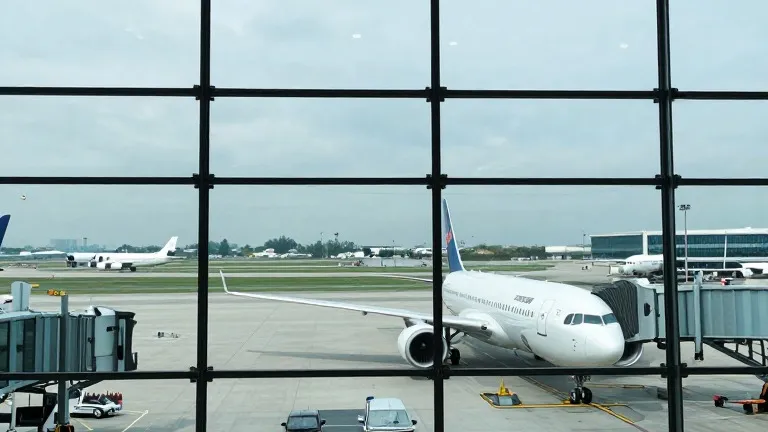
Passengers traveling through Moscow are dealing with increasingly long groundings at the city's four main airports. According to data from the independent outlet Agentstvo, Domodedovo, Sheremetyevo, Zhukovsky, and Vnukovo suspended operations almost every day in October. On several days, closures lasted as long as nine hours, forcing airlines to delay or cancel departures and arrivals.
The disruption follows a strategic shift announced by Ukrainian President Volodymyr Zelenskyy in early September. He stated that Ukraine aimed to make the airspace around Moscow unsafe for commercial travel. The following day, Ukraine issued a formal warning to the International Civil Aviation Organization. This campaign is part of a larger effort to restrict Russian aviation, mirroring the closure of Ukrainian airspace that has been in place since February 2022.
The immediate cause of the groundings is a safety protocol managed by Rosaviatsiya, Russia's aviation authority. Known as the carpet protocol, this procedure mandates the immediate closure of airspace when an aircraft violates boundaries, weapons are fired, or unidentified objects appear in the sky. Once triggered, strict limits apply to all air traffic in the affected region.
Oleksandr Laneckij, the chief executive of Friendly Avia Support, explained that the protocol treats every drone as a military threat. He noted that Ukraine's military capabilities far exceed those of groups that have previously disrupted airspace in the Middle East. Jan Matvejev, a military analyst, agreed that Ukraine could easily disrupt traffic with simple drones that do not require warheads or long range. He added that Ukraine's industry currently produces hundreds of combat-ready long-range drones daily.
Experts warn that the reliance on air-defense missiles poses risks to civilian aircraft. Matvejev argued that Russian defenses are not fully effective, suggesting that if drones could be easily shot down, they would have been by now. He cited the 2024 crash of an Azerbaijan Airlines flight, in which a Russian air-defense missile hit the plane, killing 38 people. He stated that little has changed in the protocol since that incident, and that mass-produced missiles carry a risk of malfunctioning near airliners.
Laneckij said the future of foreign flights to Russia depends on the military threat, passenger demand, and insurance costs. If insurers classify the risk as very high, premiums could rise sharply, driving up ticket prices. He noted that competition in the Russian market has already shrunk due to airline bankruptcies, increasing demand for the remaining seats. The decision to continue flying will ultimately rely on the price carriers are willing to pay for the danger they face.
The impact extends beyond Moscow. Ukrainian forces attacked Pskov airport in the summer of 2023, and drone debris fell on Sochi airport earlier this month. In response, Russia has struck Ukrainian airports, including Kyiv and Boryspil, according to Zelenskyy in September.
Source: Deutsche Welle