Road Safety: Federal regulators propose a national cyan light standard for driverless cars
The NHTSA has drafted new rules that would standardize the use of blue-green marker lamps to alert drivers and police when an automated system is in control of a vehicle.
By Anna Nowak ·
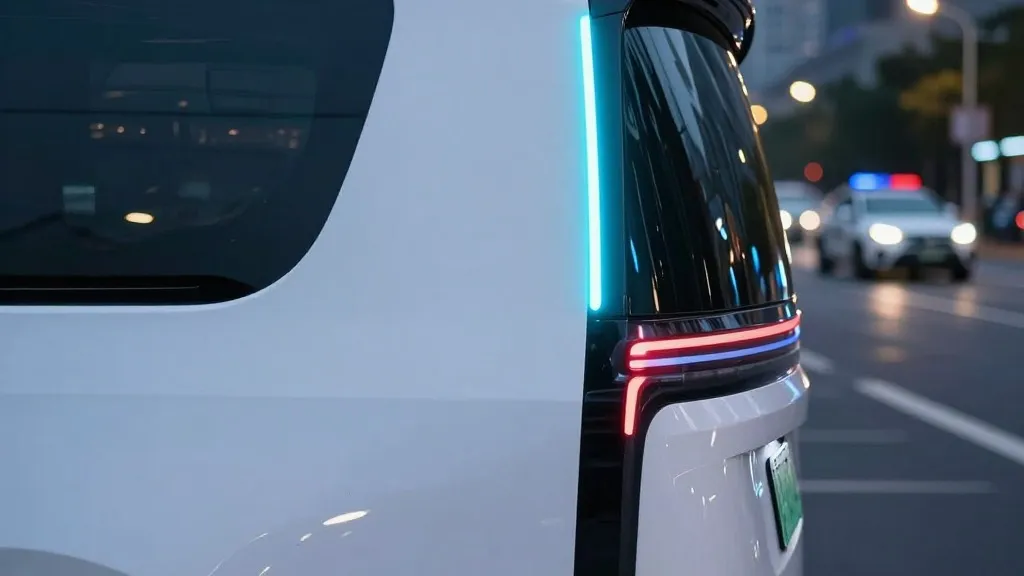
For the first time, federal regulators are proposing a specific visual cue to tell the rest of the road that a car is being driven by a computer. The National Highway Traffic Safety Administration, or NHTSA, has released a draft rule that would allow driverless vehicles to use distinct cyan-colored marker lamps. This change aims to provide a clear, consistent signal to law enforcement officers and other motorists when an automated driving system is fully operating the vehicle, removing the guesswork from current interactions with robotaxis.
The core of the proposal involves rewriting Federal Motor Vehicle Safety Standard No. 108 to accommodate autonomous technology. By establishing a federal standard for this specific blue-green light, the agency seeks to end the industry debate over how these vehicles should communicate their status. Previously, manufacturers had to rely on a mix of flashing text, audio alerts, or custom lighting solutions. The new rule would create a unified visual language, ensuring that whether a car is built by Waymo, Nuro, or Zoox, the signal remains the same.
The choice of cyan is driven by practical necessity. Existing traffic laws already reserve red for braking, amber for turn signals, white for headlights, and flashing blue or red for emergency services. Introducing a new color that is not already associated with a specific function helps fill a visual gap. This prevents confusion on the road, as drivers and police officers will not have to decipher if a new color means the car is stuck in traffic or if the computer is in control.
There is already some precedent for this approach. Mercedes-Benz received state-level approval to use turquoise lights on its Level 3 Drive Pilot vehicles. Although the automaker has since moved toward a Level 2++ system, the initial approval shows that regulators are comfortable with the concept. NHTSA wants to take that concept and turn it into a national standard that all major players, including GM and Mercedes, can adopt without needing separate state approvals.
Under the draft rule, the cyan marker lights would be optional for manufacturers. However, the NHTSA is setting strict guidelines for their color, brightness, and location. This ensures that if a company chooses to install the lights, they do so in a legally compliant and consistent manner. The goal is to avoid a fragmented market where different brands use slightly different shades or placements, which could lead to driver uncertainty.
The proposal also targets outdated requirements that do not make sense for vehicles without human drivers. Current rules mandate physical components like hazard switches, manual beam shifters, and turn levers. The agency proposes removing these mandates, allowing automakers to design interiors that are free of traditional controls. Additionally, the rule updates the 12.8-volt testing standard to accommodate modern LED architectures, reducing administrative hurdles for manufacturers.
This move is part of a broader effort by the Department of Transportation to streamline the deployment of autonomous vehicles. The government is looking to remove barriers that prevent the creation of cars designed exclusively for automated driving. This includes potentially eliminating requirements that dictate the specific positioning of high-beam and low-beam lights, giving engineers more freedom in their designs.
Despite these efforts to ease regulations, the agency is still enforcing existing rules strictly. Just last month, NHTSA opened an audit query into the Tesla Cybercab. The investigation focuses on the technical data and processes Tesla used to certify the vehicle. The primary concern is the absence of traditional features such as sideview mirrors, pedals, and a steering wheel, which are currently required under the existing safety standards. This audit highlights the tension between modernizing rules for the future and holding manufacturers accountable under current law.
Source: The Verge