Strategic Pivot: Tesla Develops Proprietary Mapping for FSD
The electric vehicle maker is constructing its own navigation data to resolve persistent errors in speed limit recognition and routing.
By Mykola Bondarenko ·
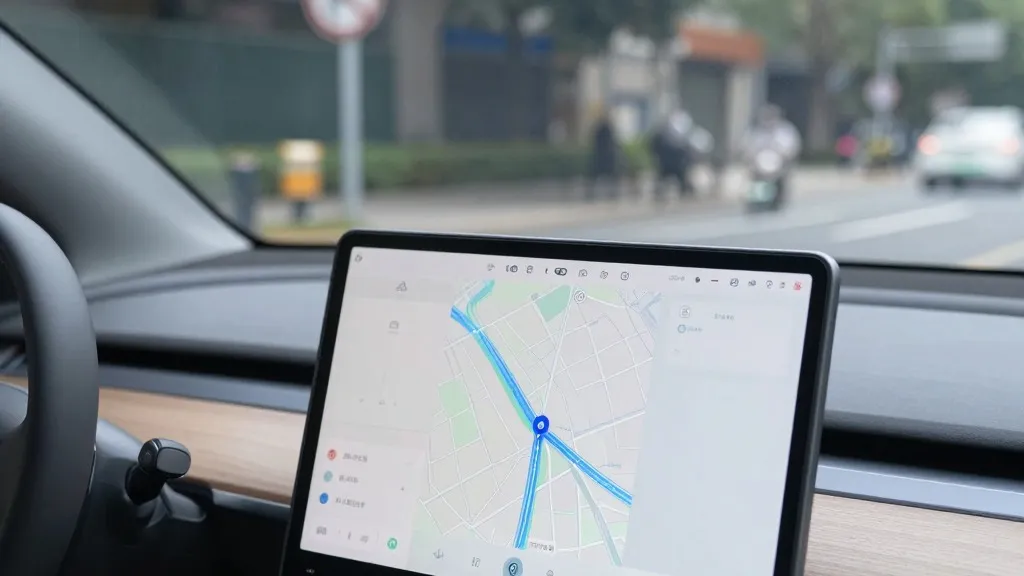
Tesla has officially confirmed that it is developing its own mapping infrastructure to address persistent flaws in its Full Self-Driving software. This move represents a significant departure from the company’s long-standing public stance, which previously dismissed the reliance on detailed maps as a sign of brittleness in autonomous driving systems. The shift was detailed during the company’s third-quarter 2026 earnings call, where executives acknowledged that the current system struggles with basic environmental cues such as speed limits, parking scenarios, and route selection.
The initiative was triggered by direct feedback from shareholders during a recent question and answer session. A retail investor highlighted that mapping issues remain a core problem for the FSD system, specifically citing speed limits, parking, and typical routes as the most common failures. In response, Ashok Elluswamy, Tesla’s Vice President of AI, agreed with the assessment. He stated that the company should no longer depend on external providers for map data and is now building a proprietary solution using a new AI-based architecture.
Elluswamy explained that the new mapping system will be fed by data collected collectively from Tesla’s global fleet. This approach allows the system to learn individual driver preferences and respond to voice commands while improving overall navigation accuracy. The technology is scheduled to begin managing the start and end of trips with the release of FSD v15. Over the coming months, Tesla intends to expand this capability to handle full navigation, parking, and destination processing.
This development contradicts messaging from the company’s early years. In 2015, Tesla claimed it was creating high-precision maps with significantly higher granularity than standard navigation tools. However, at its 2019 Autonomy Day, CEO Elon Musk described high-precision lane maps as a "huge mistake." He argued that relying on such maps made systems "extremely brittle," a view that aligned with his dismissal of lidar as a "fool’s errand." At the time, the message was that Tesla could solve driving using cameras and AI alone, anywhere in the world.
Critics and analysts note that Tesla’s current approach mirrors the strategy employed by competitors like Waymo. While Tesla does not use lidar, its fleet now performs a similar function by mapping roads to identify information the system cannot reliably determine on its own. Both companies are creating their own maps to support their self-driving efforts. The primary technical difference remains the hardware used for data collection, with Waymo relying on lidar-equipped vehicles and Tesla using its existing camera-based fleet.
The need for this map layer is underscored by recent performance data. A Belgian road safety group found that FSD vehicles exceeded the speed limit in 55% of 30 km/h zones tested in Brussels, often because the car’s display showed an incorrect limit of 50 km/h. In the United States, the National Highway Traffic Safety Administration is considering an investigation into claims that Tesla Robotaxis speed through active school zones. These incidents highlight that the vision-based system still struggles with simple environmental inputs like speed limit signs.
The new mapping strategy also aligns with the operational reality of Tesla’s Robotaxi service. The service currently operates within specific geofenced areas, city by city, with Tesla managing fleet operations directly. While the company is not currently advertising centimeter-level high-definition maps, a fleet-built map that becomes more detailed over time could easily evolve in that direction. This approach suggests that the distinction between Tesla’s vision-only method and other mapping-heavy systems is becoming increasingly blurred.
Looking ahead, Tesla has pushed the timeline for unsupervised FSD in consumer cars to the second quarter of 2027. Until then, the company will focus on refining its Robotaxi fleet within controlled geographic boundaries. As the company integrates its new mapping architecture, the industry will watch closely to see if this proprietary data source resolves the fundamental reliability issues that have plagued the vision-based approach for the past decade.
Source: Electrek