Tesla Retires Cybertruck in Australia and New Zealand After Seven-Year Wait
The electric automaker has voided thousands of reservations in the region, citing the high cost of converting the vehicle for right-hand drive markets.
By Christopher Reed ·
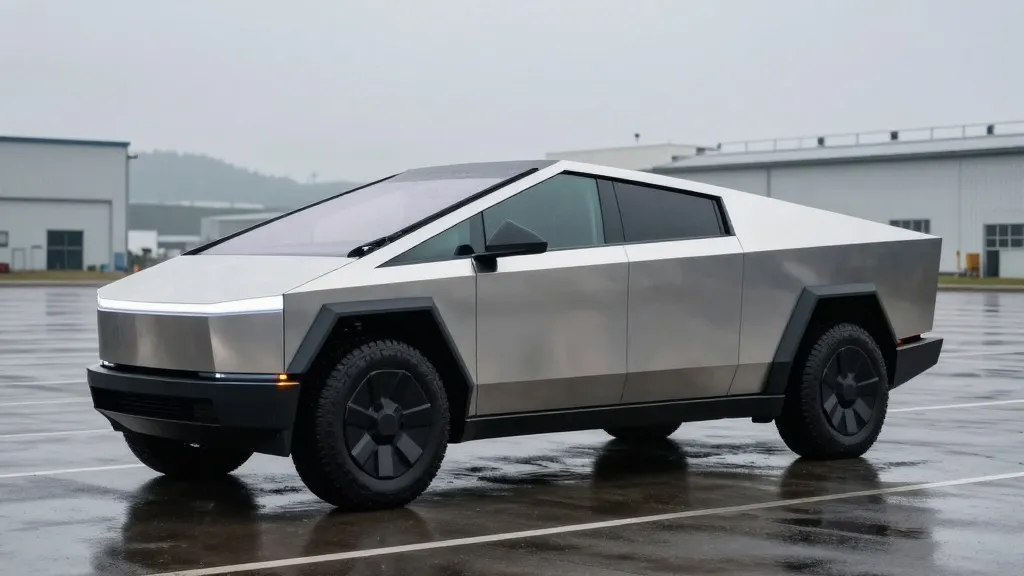
Tesla has officially ended its plans to bring the Cybertruck to Australia and New Zealand, effectively canceling reservations held for nearly seven years. In a brief email sent to customers this morning, the company confirmed that production for these specific markets has been discontinued. This move concludes a long period of uncertainty for buyers who have been waiting since 2019 for a vehicle that, according to Tesla, it will no longer build for their region.
The decision stems primarily from the engineering challenges and financial costs associated with adapting the vehicle for right-hand drive configurations. The Cybertruck is currently manufactured exclusively in left-hand drive, a standard used in the United States, Canada, and several Asian and Middle Eastern markets. To sell the truck in Australia and New Zealand, Tesla would have needed to re-engineer the steering, dashboard, and safety systems, a significant investment for a model that is already facing shifting demand patterns in North America.
Customers who placed reservations are being offered a full refund of their deposits, with processing expected within 30 days. As a gesture of goodwill, Tesla is providing a one-year subscription to its Supervised Full Self-Driving software for those who choose to purchase a new Model 3 or Model Y instead. This strategy appears designed to convert the cancelled pickup truck interest into sales of vehicles that Tesla already produces in right-hand drive formats for the local market.
The cancellation follows a timeline marked by delayed expectations. Australian customers began paying A$150 reservations in November 2019, making this one of the longest waits for any Tesla product in the region. By 2022, Tesla quietly closed the reservation page and replaced it with a button to receive updates, leaving existing holders in a limbo where their deposits were not refunded but the vehicle was not delivered. In 2024, CEO Elon Musk told shareholders that certification for other markets might happen "sometime next year," a timeline that has now passed without a right-hand drive version arriving.
Market data suggests the truck had a strong initial following in the region. A 2020 crowdsourced survey indicated that Australia held roughly 3% of all global Cybertruck reservations, placing it third behind the US and Canada. However, the lack of confirmed regional numbers from Tesla made it difficult for buyers to gauge true demand. The decision to drop the market comes shortly after Tesla reported its Q3 2026 earnings, highlighting a broader shift in how the company manages its international expansion.
Financially, the volumes do not currently support the cost of a dedicated right-hand drive program. In Q3 2026, Tesla delivered approximately 8,295 units categorized as "Other Models," a segment that now consists almost entirely of Cybertrucks since the Model S and X production lines ended. Analysts estimate this represents a sales pace of roughly 30,000 units annually, significantly below the production line's capacity of 250,000 units per year. For a vehicle with a niche appeal, the expense of re-engineering for two markets with a combined population of about 33 million appears difficult to justify.
Internationally, Tesla has focused on launching the Cybertruck in left-hand drive markets, including South Korea, the UAE, Saudi Arabia, Qatar, Jordan, and Israel. The vehicle remains blocked in the European Union, largely due to pedestrian safety regulations. With demand in North America also softening from its 2024 peaks, Tesla appears to be consolidating the Cybertruck as a primarily American product. The cancellation in Australia and New Zealand signals that the company is prioritizing existing left-hand drive buyers over the investment required to expand into new regional configurations.
For the thousands of Australian and New Zealand reservation holders, the news ends a cycle of waiting that began with early hype and ended with a formal discontinuation. While many likely anticipated this outcome, the formal confirmation brings closure to a seven-year process. Tesla’s move suggests a more pragmatic approach to its vehicle lineup, focusing on markets where the current hardware can be sold without significant modification.
Source: Electrek