Oxford Street: Shoppers embrace car-free zone as first phase of permanent overhaul begins
A £150m permanent redesign begins after a temporary pedestrian zone opened ahead of the Christmas trade.
By Elena Svoboda ·
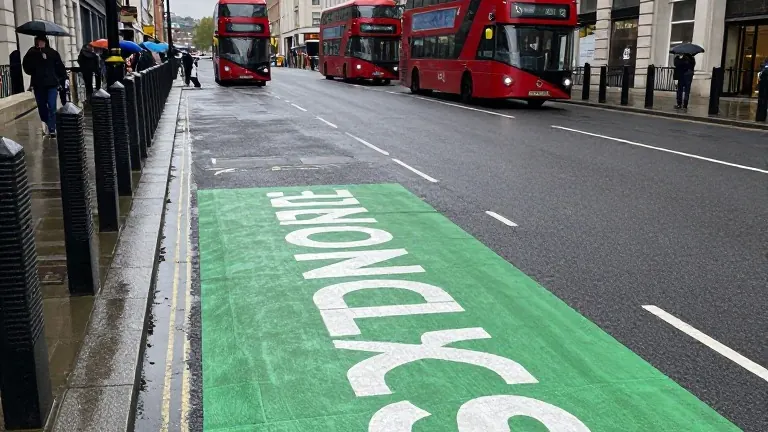
London’s most famous retail street is now half pedestrianized, removing private vehicles, buses, and e-scooters from roughly 1.2 miles of roadway. The change took effect on a wet Monday morning, with Sadiq Khan describing the opening as a momentous day for the capital’s retail sector. The zone spans from Oxford Circus to Marble Arch, forcing double-decker buses and taxis onto adjacent side streets.
The temporary closure marks the first phase of a larger, permanent transformation. A £150m project is scheduled to begin in spring 2027. This second phase will introduce trees, seating, and level plazas for events. The initial pedestrianization was designed as a proof of concept to test whether removing traffic increases footfall and consumer spending.
Shoppers on the street responded positively to the expanded walking space. Daniel Te, a former city planner who moved to London from the United States in July, said the extra room made the street more inviting. He noted that he previously avoided the area due to crowding. "Now there's more space to walk around, I'm more inclined to come," he said. Raquel Cox, visiting from Ireland, also cited the improved environment as a key benefit for shoppers.
Local business owners are monitoring the early effects. Abbas Shigival, who operates a souvenir kiosk at the start of the zone, observed that traffic was slightly busier than usual. He described the atmosphere as more pleasant because customers could move freely. Khan, who started his career in retail on the street, echoed these sentiments. "Investing in people rather than traffic leads to better footfall and spend," he told reporters.
Transport for London is managing the shift in transit flow. Claire Mann, the chief operating officer, stated that bus capacity remains sufficient and reliability should hold. She indicated that the Elizabeth Line and Bond Street station offer alternative access points. The agency is currently tracking ridership data to assess the long-term impact of the bus rerouting.
Not all road users welcomed the change. Ben McMullan, a taxi driver, reported that surrounding streets became congested and accessibility for some passengers declined. He noted that customers with mobility issues struggled without direct vehicle access. Jack, a cyclist, said he planned to ride through the zone despite security guards stopping cyclists. "It's not going to work for me," he said, citing a longer commute route.
The city will rely on feedback from this first phase to finalize the permanent design. Khan said London would closely monitor the changes to ensure they work for all users. The permanent infrastructure is set to break ground in spring 2027.
Source: The Guardian
More Business · Consumer Alerts · Report a business · Got a Story?