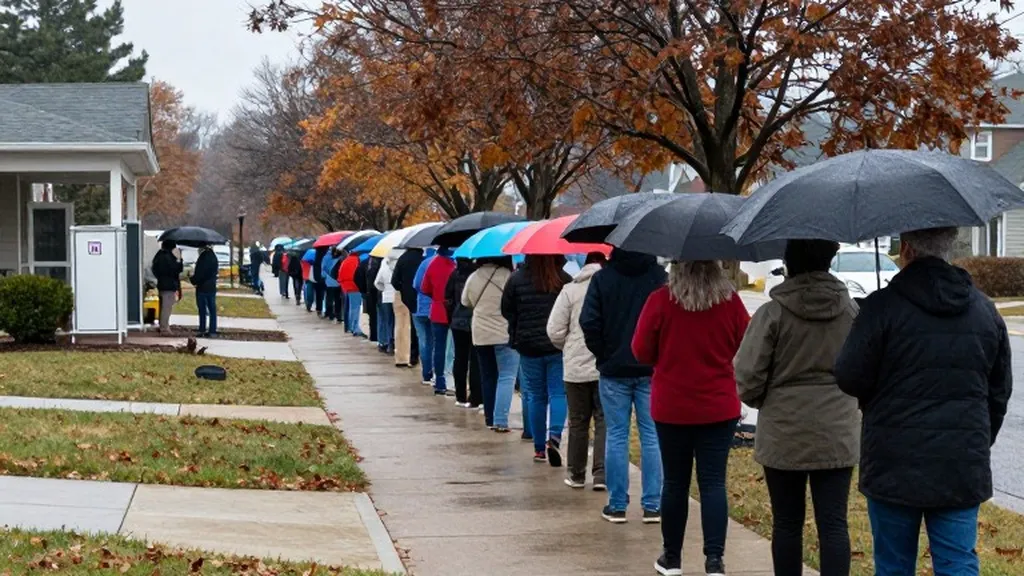
Breaking: Election Day is here! Make your selections: The midterm stakes for Congress and the presidency
Voters across the nation are casting ballots to determine control of Congress, with all House seats and 35 Senate seats on the ballot in a high-stakes midterm contest.
By Elena Svoboda ·
It is Election Day, Tuesday, November 3, 2026, and polls are open across the country. This midterm election occurs halfway through President Donald Trump's second term, and the results will decide which party controls Congress for his final two years. All 435 seats in the U.S. House of Representatives are up for election, along with 35 of the 100 U.S. Senate seats. Additionally, 36 governorships are on the ballot. The outcome will shape the legislative landscape for the remainder of the current administration and set the stage for future political battles.
In the House, Democrats currently hold 214 seats, while Republicans hold 218 seats, with one independent seat and some vacancies. Democrats need a net gain of three districts to achieve a majority, whereas Republicans can afford to lose no more than two seats. According to Ballotpedia, 46 districts are considered battlegrounds. In the Senate, Republicans hold 53 seats and Democrats hold 45 seats, with two independents who caucus with the Democrats. Democrats need a net gain of four seats to take control, while Republicans can lose only two. Eleven senators are not running again, creating open seats in several states.
The mood entering the day is one of high tension and significant financial investment. According to the Associated Press, the election is being viewed as a referendum on the president's second term. Voters are described as struggling with high prices and anger over an unpopular war with Iran. Polling data from AP-NORC indicates that 35 percent of U.S. adults approve of Trump's job performance, while 25 percent approve of his handling of the economy. About seven in 10 adults say the country is heading in the wrong direction. More than 57 million people had already voted as of Monday, surpassing early vote totals from four years ago in many closely watched states.
Republican leaders are bracing for potential losses in the House while fighting to hold the Senate. RNC Chairman Joe Gruters stated that everything depends on turnout, asserting that if they turn out their voters, they will win. Conversely, Democrats are described as cautiously optimistic. DCCC Chair Rep. Suzan DelBene noted that the American people are angry and want change. The Associated Press reports that one or two seats could tip either chamber. If Democrats win even one chamber, investigations and possible impeachment proceedings become likely. House Democratic Leader Hakeem Jeffries would be the first Black speaker and has outlined a 100-day agenda focused on the cost of living and oversight.
Several Senate races are particularly competitive. In North Carolina, Democratic former Governor Roy Cooper faces former Republican National Committee chair Michael Whatley. In Georgia, Sen. Jon Ossoff is running against Republican Rep. Mike Collins. In Ohio, Democratic former Sen. Sherrod Brown is challenging Republican Sen. Jon Husted. In Michigan, Republican former Rep. Mike Rogers is opposed by Democrat Abdul El-Sayed. In Texas, Republican Attorney General Ken Paxton, who received Trump's backing, is running against Democrat James Talarico. In Maine, Sen. Susan Collins is facing Democratic former state Senate President Troy Jackson. The AP notes that economic strain and tariffs have made Maine competitive. In New Hampshire, Democratic Rep. Chris Pappas is running against former Republican Sen. John E. Sununu.
Governor races are also crucial to the national picture. Democrats are defending five governorships in states that Trump won in 2024, including Arizona, Kansas, Michigan, Pennsylvania, and Wisconsin. Republicans are defending two governorships in states that Harris won: New Hampshire and Vermont. In Georgia, Republican health care executive Rick Jackson is running against Democratic former Atlanta Mayor Keisha Lance Bottoms. In Nevada, Republican Gov. Joe Lombardo is facing Democratic Attorney General Aaron Ford. In Ohio, Republican Vivek Ramaswamy is running against Democrat Amy Acton. The AP calls Texas, Florida, and Iowa competitive governor races. Democrats hope to hold a majority of governorships for the first time in two decades, a position Republicans have held since 2010.
The election is also marked by significant financial spending and legal challenges. The 2026 elections are likely to be the most expensive in history. Republican committees have outraised and outspent Democratic committees, helped by Trump-affiliated groups and Elon Musk. However, at the candidate level, Democrats have outraised their opponents. According to AP analysis of AdImpact data, 88.1 percent of Republican general election TV ad spending went to states and districts Trump won in 2024. This includes more than 850 million dollars spent in areas where he won by 10 points or more. Legal disputes have also arisen, with the Trump administration filing a lawsuit in Alaska related to the certification of the Senate result.
Voters are expressing a range of opinions about the current administration. Mark Barker of Palm Beach Gardens, Florida, said he has been following Trump the whole time and thinks he is doing an awesome job. James Moore, 57, a librarian in Raleigh, North Carolina, stated that he is paying more taxes, more for healthcare, and more for everything. These personal accounts reflect the broader national sentiment described by the Associated Press, where voters are grappling with economic pressures and political disagreements. The stakes are high, with the potential for significant shifts in legislative control and future political leadership.
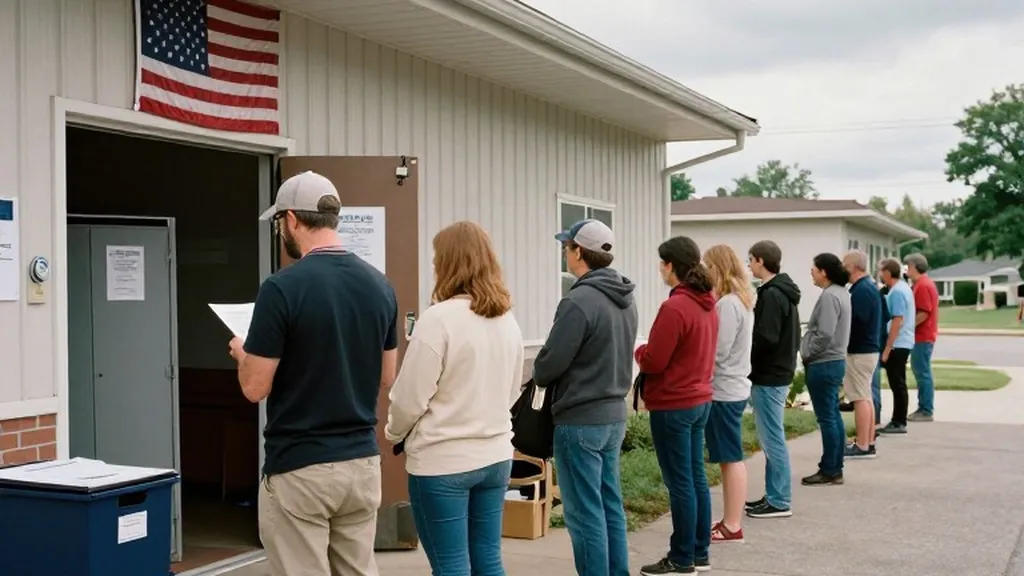
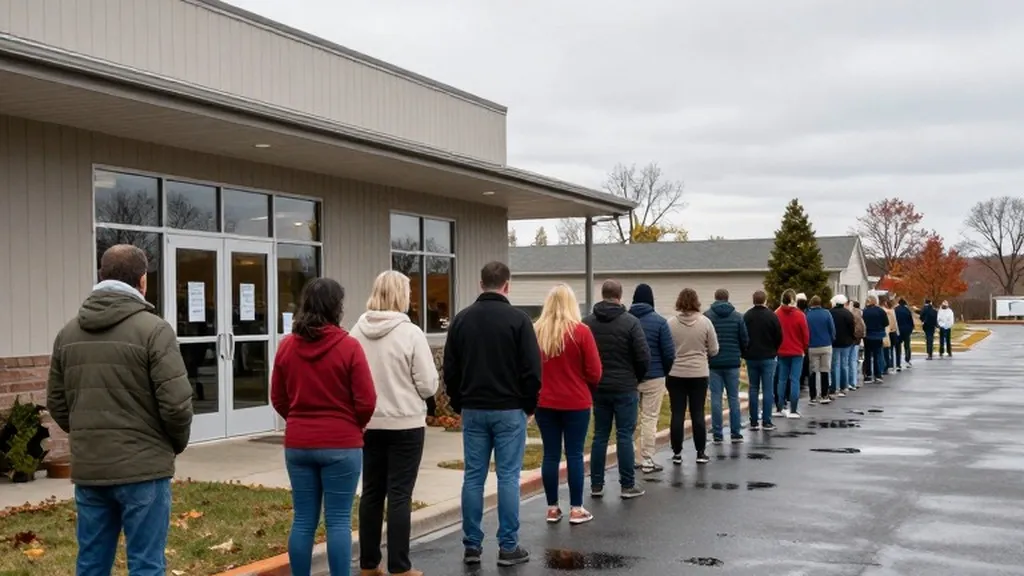
To vote today, voters should find their polling place at vote.gov or their state election office. Anyone in line when polls close is entitled to vote. ID rules vary by state, so it is important to check local rules before going. Poll hours vary by state. For example, in California, polls are open from 7 a.m. to 8 p.m., and the state is largely voting by mail. In New York, polls are open from 6 a.m. to 9 p.m. In Texas, polls are open from 7 a.m. to 7 p.m. In Florida, polls are open from 7 a.m. to 7 p.m. in both Eastern and Central time zones. In Michigan, polls are open from 7 a.m. to 8 p.m. In Ohio, polls are open from 6:30 a.m. to 7:30 p.m. In Pennsylvania, polls are open from 7 a.m. to 8 p.m. In Wisconsin, polls are open from 7 a.m. to 8 p.m. In Iowa, polls are open from 7 a.m. to 8 p.m.
In other states, poll hours include 7 a.m. to 8 p.m. in Maryland, Massachusetts, and Montana. In Minnesota, polls are open from 7 a.m. to 8 p.m. In Missouri, polls are open from 6 a.m. to 7 p.m. In Nebraska, polls are open from 8 a.m. to 8 p.m. Central time and 7 a.m. to 7 p.m. Mountain time. In Nevada, polls are open from 7 a.m. to 7 p.m., with much of the state voting by mail. In New Hampshire, poll hours vary by town, with polls open by 11 a.m. and closing no earlier than 7 p.m. In New Jersey, polls are open from 6 a.m. to 8 p.m. In New Mexico, polls are open from 7 a.m. to 7 p.m. In North Carolina, polls are open from 6:30 a.m. to 7:30 p.m. In North Dakota, polls open between 7 a.m. and 9 a.m. and close between 7 p.m. and 9 p.m.