Eisenkot Needs Arab Partnership to Challenge Netanyahu
Initial counts show no clear winner, leaving the former military chief with a fragile path to power that hinges on unlikely allies.
By Omar Bennett ·
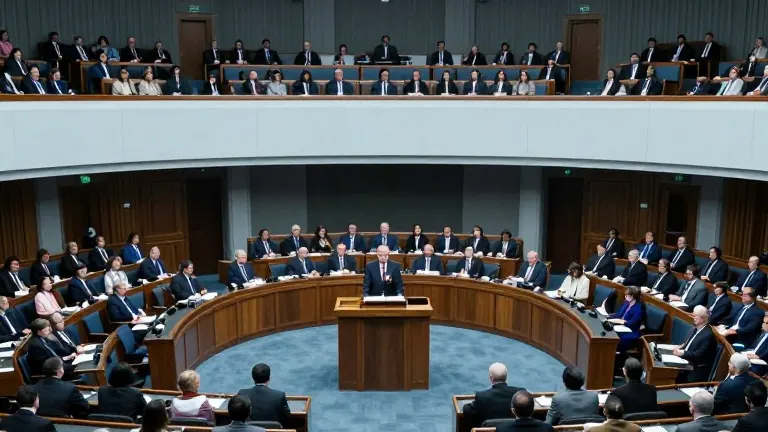
Gadi Eisenkot’s path to replacing Prime Minister Benjamin Netanyahu rests on a fragile alliance with Arab-led parties.
Preliminary results from Israel’s elections commission released on Wednesday indicate that neither major bloc has secured the 61 seats required for a majority in the Knesset. Local media projections place Netanyahu’s Likud and its allies at 53 seats. Eisenkot’s Yashar party and its centrist and liberal partners hold 48 seats. Arab-led parties, which are primarily composed of Palestinian Muslims and Christians, have won 19 seats.
The arithmetic leaves Eisenkot with a single viable option to form a government. He must persuade the Arab-led parties to join his coalition. Netanyahu and many within his Likud party have ruled out such a partnership. Eisenkot has not ruled it out, but the arrangement faces resistance from right-wing members of his own bloc who may defect if they work with minority Arab parties.
To prevent those defections, Eisenkot’s team has asked Arab parties to publicly adopt four principles. These include recognizing Israel as a Jewish and democratic state, designating Hamas as a terrorist organization to be disarmed and demolished, and ending exemptions from mandatory military service for ultra-Orthodox Jews and Palestinian citizens. Lian Polak-David, a Yashar candidate, told The Associated Press on Tuesday night that no ultra-Orthodox or Arab party currently supports all four principles.
The coalition faces a strict timeline. If the parties cannot reach an agreement soon, Israel risks another round of elections. Tens of thousands of citizens who traveled to Israel for the first vote might be unable to return for a second. Arab parties would also likely see lower turnout in a subsequent election. Eisenkot said on Tuesday night in Tel Aviv that the situation demands swift action to unite the country.
Eisenkot, 66, has lost three family members to the war in Gaza. His son Gal Meir Eisenkot, 25, was killed in combat, as were his two nephews. He is the son of Moroccan-Jewish immigrants and spent four decades in the military, including serving as the military chief of staff. He served as an observer in the war cabinet after the October 7, 2023, attacks by Hamas. He resigned from the cabinet in June 2024, citing Netanyahu’s political influence on military decisions.
The former commander supports a state inquiry into the failures of October 7, a probe Netanyahu has long refused. He backs legislation to mandate military service for ultra-Orthodox Jews. On security, he supports the Dahiyeh Doctrine, a strategy of using disproportionate force against enemies, but also wants to follow President Donald Trump’s plan for Gaza and evacuate unauthorized settler outposts in the West Bank.
Source: KSAT-TV